Enter the Cave. Confront the Shadow. Return in Right Order.

Impressions Discipline
PRACTICES AND PROTOCOLS
2/28/2026
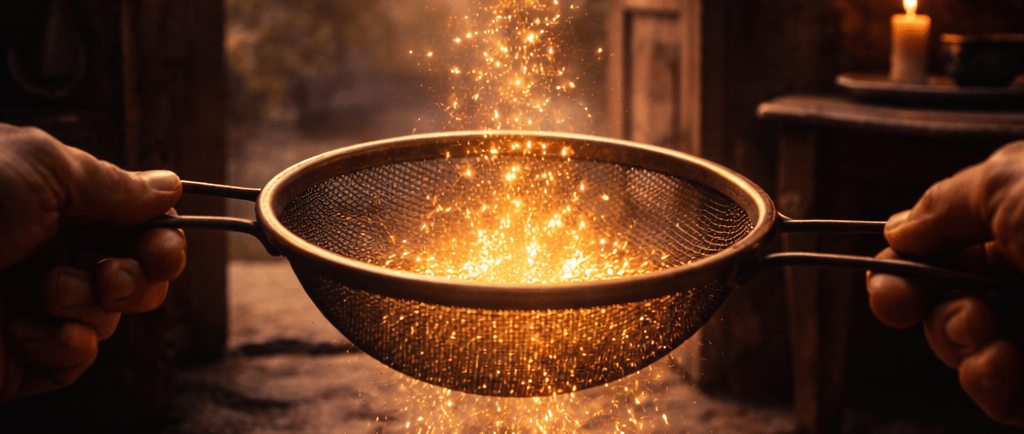

You become what you repeatedly take in.
Not only through food. Through impressions.
An impression is any input that enters you and leaves a trace: images, words, tone, atmosphere, conflict, content, music, conversations, social media, pornography, news, advertising, even the inner replay of an old memory.
Impressions are not harmless. They are formative.
If you want stability, you must become disciplined about what you ingest.
Impressions Discipline is the practice of choosing inputs deliberately so the false-self complex has less fuel to work with.
What Impressions Discipline Is
Impressions Discipline is a practical rule for attention:
you reduce unnecessary provocation
you limit the inputs that trigger coupling and passion
you choose environments and content that support inner order
you stop feeding the same wounds with the same material
This is not avoidance. It is training.
You do not become strong by constantly bathing in poison and calling it “exposure.”
You become strong by reducing fuel while you build capacity, then engaging the world from stability rather than compulsion.
Why Impressions Matter
The Capture Chain begins with contact.
Provocation → Coupling → Wrestling → Passion → Assent → Actualization → Captivity
Many provocations are not “life.” They are optional inputs you repeatedly choose:
scrolling feeds and comment wars
outrage news cycles
sexual imagery
doom narratives
humiliating comparisons
gossip and accusation
entertainment that trains contempt
If you keep injecting provocations, you will keep practicing coupling.
Impressions Discipline removes unnecessary provocations so you can practice freedom.
The Fourth Way speaks of impressions as a kind of “food” that can be transformed only when received consciously rather than mechanically.
That is the same principle in simple terms: the way you receive what enters you determines whether it strengthens you or captures you.
Impressions Discipline Across the Core Schools
Different schools name this differently, but the functional discipline is shared.
Hesychasm emphasizes guarding the heart and refusing intrusive images and thoughts before they take root.
Sufism emphasizes remembrance and the purification of the heart from heedlessness and dispersal, which includes protecting the inner space from needless distraction.
Buddhism emphasizes mindful contact and non-clinging, recognizing that untrained contact with sense objects strengthens craving and suffering.
Stoicism emphasizes the discipline of perception, refusing to let externals dictate inner state through unexamined assent.
The Fourth Way emphasizes that mechanical reception of impressions fuels sleep, and that consciousness requires deliberate attention.
Again, different terms. Same objective observation: inputs shape states.
What Impressions Discipline Is Not
Not fragility
You are not becoming delicate. You are refusing unnecessary exposure while training stability.
Not isolation
You still live in the world. You simply stop bathing in optional provocation.
Not moral superiority
This is not “I am better because I do not watch what you watch.”
It is training. Quiet and personal.
The Three Classes of Impressions
Impressions Discipline becomes simple when you sort inputs into three classes.
1) Necessary impressions
These are required for your responsibilities: work, family, logistics, real conversations, real problems.
You do not eliminate these. You meet them with practice.
2) Optional impressions
These are chosen inputs: feeds, entertainment, certain conversations, news consumption, browsing, “just checking.”
Most captivity is fueled here.
This is where discipline has the highest payoff.
3) Poison impressions
These are inputs that reliably produce coupling and passion in you.
They may be different for different people. Examples:
pornography or sexual imagery
outrage political content
conflict-heavy comment sections
humiliation comparison content
gossip and slander
doom scrolling late at night
Poison impressions are not “bad” in theory. They are bad in function because they reliably capture you.
Impressions Discipline means you remove or severely limit poison impressions.
The Two Questions That Cut Through Everything
When deciding whether to take in an impression, use two questions:
Does this increase coherence?
Does it make you more steady, truthful, capable, and merciful?
Does this trigger coupling?
Does it reliably produce replay, fantasy, resentment, craving, or urgency?
If it reduces coherence or triggers coupling, it is not neutral.
It is training you in captivity.
Practical Rules That Work
Here are rules that actually hold in real life.
Rule 1: No poison impressions when tired
Fatigue is when the false-self complex wins most easily.
If you are tired, do not feed it.
Rule 2: No news or conflict content before morning practice
Begin the day with inner order, not provocation.
Rule 3: End the day clean
The last hour before sleep is formative. Do not fill it with poison impressions.
Rule 4: Protect the first five minutes after waking
Do not hand your attention to a feed immediately.
Rule 5: Reduce “background noise”
Constant input prevents return. Silence is stabilization.
Objective Observation Tests
Impressions Discipline is working when you notice:
fewer sudden spikes of anger or craving
less replay and rehearsal
reduced substitution pressure
improved sleep quality
less urgency to check devices
more space for practice to take root
more natural compassion under friction
These are practical indicators. They show reduced fuel and increased inner order.
Common Traps
Trap 1: Trying to live in a perfectly controlled environment
You do not need perfection. You need reduction of optional poison.
Trap 2: Using discipline as a weapon
If you use your discipline to feel superior, the false-self complex has simply changed costumes.
Trap 3: Replacing poison impressions with “spiritual entertainment”
Endless spiritual content can become another feed.
Practice must remain primary.
7-Day Training Plan
For seven days, run a simple impressions discipline protocol.
Step 1: Identify your top two poison impressions (2 minutes once)
Write them down.
Examples:
late-night scrolling
conflict content
sexual imagery
gossip chats
comparison content
Step 2: Remove one for seven days
Remove it completely if possible. If not, reduce it by 80 percent.
Step 3: Install one clean replacement
Choose one:
10 minutes of silence
a short walk
one page of a sober source text
breath-linked return phrase for 60 seconds
one clean duty performed slowly
Step 4: Objective observation log (10 seconds daily)
Each evening, write:
“less coupling” or “still fed it”
That is enough.
Closing
You cannot stabilize while drinking provocation all day and calling it “life.”
Impressions Discipline is not fear. It is wisdom.
You are choosing what enters you so your heart can become clear, steady, and free.
Let love, compassion, and mercy be with each of us.
Awareness
Presence
© 2026, All rights reserved upon all original content presented by From Shadows. Re-use of content within context and link to website is noted within, re-use is hereby granted.
From Shadows provides educational and spiritual content for personal development. We do not provide medical advice, diagnose conditions, prescribe treatment, offer psychotherapy, or provide legal or financial advice. Participation is voluntary. You are responsible for your choices.